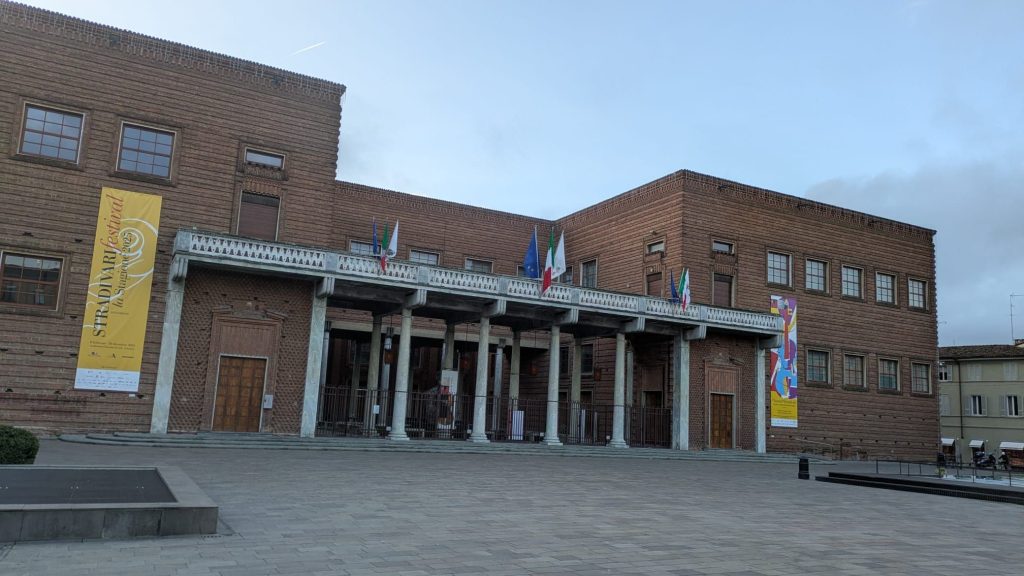
On 18 and 19 November, the PlaceMUS XR kick-off meeting took place at the Violin Museum in Cremona, Italy.
This was the sixth launch among the ten new partner projects in the second wave of ECCCH calls under the Horizon Europe programme. The next four launches will take place in January.
The ECHOES EU family will be complete in 2026, when the last eight “Innovative Use Cases” projects will be announced.
This research projet, coordinated by Eva Pietroni of CNR ISPC, focuses on creating digital applications that enable users to explore significant “places of music” across European regions and cities. The applications aim to provide an interwoven narrative, encompassing the musical event itself, its cultural and historical context, the location, and physical museum objects. This multi-layered storytelling approach will draw upon a diverse range of sources, including musical scores, instruments, chronicles, diaries, letters, philosophical treatises, and images.
The project involves geographically mapping musical locations and creating engaging thematic itineraries based on places, people, themes, and historical periods, encompassing a wealth of tangible and intangible heritages. It will be implemented through case studies which will be further adaptable and extensible in the future.
The project will focus on developing cutting-edge digital tools to enrich the visitor experience at these places of music through virtual and augmented reality experiences, multimedia accessible through different applications and tools integrated in the ECCCH. This includes a particular emphasis on reconstructing historical soundscapes, as well as the acoustic properties of spaces for musical performances, exploring the interplay between music and architecture, and harnessing the potential of virtual and augmented reality technologies.
Furthermore, the project will create design and simulation tools, conduct analysis and evaluation of the impact of audio-visual communication in museums. To achieve these aims, the project will cater to a diverse audience, encompassing scholars, museum curators, the entire educational sector, creative cultural industries, citizens and tourists. All datasets, metadata, and interaction tools will be Open Source and implemented in accordance with the FAIR principles, aligning with the knowledge base and requirements of the ECCCH.